RV vs Mobile Home What's the Difference Between Them?
Table of Content
Generally, the larger the RV, the more quickly it depreciates. On average, 5th wheels and Class A motorhomes have the most rapid depreciation, while Class B and C vehicles have the slowest depreciation of motorhomes. Travel trailers have the slowest depreciation of towable campers. There are 5th wheels, truck campers, pop-up campers, and travel trailers. You have options for extra living spaces when you purchase a manufactured home.

The lifespan of a mobile home vs. RV is greater, and the level of maintenance necessary is less. An RV is ready to move as soon as you switch on the ignition because it is a motor vehicle and home combination. Because they’re lighter, they’re not as stable in high winds or on uneven terrain.
Class B Motorhome (Campervan)
Campsite fees typically include electric, water, and dumping stations. Like everything, the cost to rent a lot in a mobile home park varies significantly by state. It depends on the type of coverage you get, as well as the miles you travel every year, the age of the motorhome, prior traffic violations, and deductible costs. Insurance on a mobile home is typically cheaper than RV insurance.
Fuel prices – high fuel prices depress the market for recreational and other vehicles. Buying land is cost-effective in some states and beyond most people’s reach in others. The upfront cost of an RV can be considerably more than a mobile home, plus the financing options are more limited. RVs are effectively high-sided vehicles and can topple in high winds from the wrong direction.
Fifth Wheel Trailer
Manufactured houses are less than half the price of the average home in America, the average house is $295,300 and a double mobile home is $111,000. Both mobile/manufactured homes and RVs offer great downsizing options, but they are different and shouldn’t be considered as the same thing. In a nutshell, the difference between an RV and a mobile home is the difference in transportation.

The significant difference in weather resistance between RVs and mobile homes lies with performance in high winds. In a mobile home, you expect the same quality of plumbing, power, and waste disposal accessed by traditional housing. RV build quality is less regulated than a mobile home, and you have a wide range of manufacturers, brands, and options. The HUD code covers all mobile homes built after 14 June 1976.
Energy Efficiency
Plus, you will always have the option of moving your home to a different location when you feel like it. Both mobile homes and recreational vehicles offer downsized living situations. But they can be very different when it comes to features and offered amenities. Mobile homes are typically more affordable than RVs, especially when you factor in the cost of land. Mobile homes can be placed on any type of property, including your own land or in a mobile home park. Yes, there are a few disadvantages to owning an RV over a mobile home.
They can be moved but only on the back of a truck, and when on site can not be easily moved again. However, as mobile homes are designed to be parked permanently, available space can be very limited. The mobile home park may also be reluctant to give a space temporarily to an RV if spaces are limited and demand from mobile homeowners is high. Modern manufactured homes have features that can rival that of conventional housing. According to the US Census Bureau, a manufactured home costs about half the price per square foot compared to stick-built houses.
There are wetlands on the park property, but the developers have proposed protecting them with a 15-foot natural buffer and 30-foot building setback. Yet, none of these three parks have drawn the same level of outrage as some subdivisions or other developments in the area. As the county develops at a breakneck pace, residents have often organized to oppose what they argue is too much development.

First, as we mentioned before, mobile homes are built in factories to strict HUD Code standards. This means they’re typically made of stronger materials than RVs, making them more durable and weather-resistant. Another advantage of mobile homes is that they offer extra living space. This can be a great perk for families who want to have a place to entertain guests or for people who simply want more room to spread out.
You need to deal with the leaseholder and will have problems if you cannot renew the lease. Straightforward financing options with cheaper mortgages available through traditional sources. Both provide alternative accommodation for leisure and daily life.
There are many mobile home parks that are well-maintained and offer a variety of amenities. Class A motorhomes are built on a heavy-duty truck chassis and can range in length from 25 feet to 45 feet. They usually have one or more slide-outs, which are sections of the RV that extend out from the side to create additional living space inside. These vehicles are what many people think of when they think about motorhomes.
But true mobile homes have to meet certain regulations that RVs do not in order to live in them. But, most RV campgrounds that allow permanent residents will also allow mobile homes. RVs are best for people who really enjoy traveling and who want to be on the move always. It is an extremely mobile option that can still provide adequate amenities for a comfortable living situation while on the road.
So from 1976 onwards, mobile homes were required to be made according to new and higher quality standards. This type of RV, also called coach-built, is made by raising the roof on a standard van or replacing its low-profile body altogether. Different countries have varying interpretations of how a class B motorhome should be built. A mobile home is a prefabricated structure built in a factory on a chassis and then towed to a site.
Pros and Cons of Mobile Homes
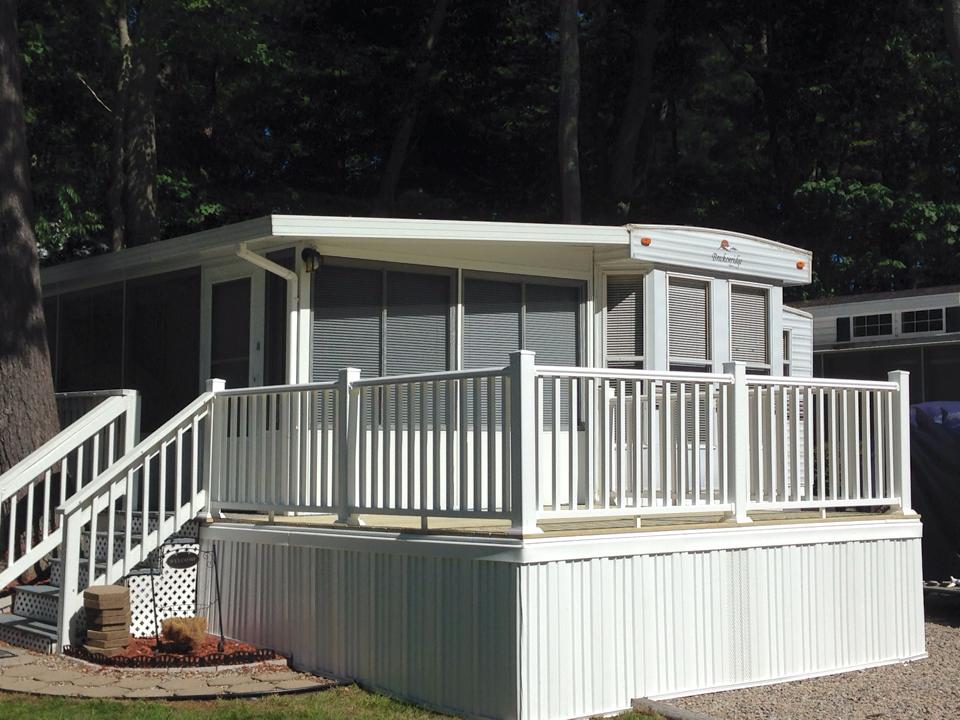
RVs are homes either in a trailer or self contained in a motor vehicle. Mobile homes are typically larger and don’t have wheels and can’t easily be moved without a flatbed truck and a crane. Many customers add a 6’ or 8’ porch on the front of their park model RV. Some also add a second porch on the back end, off of the bedroom, to take as much advantage as possible of their park model RV experience.

If you’re looking for a permanent residence, then a mobile home might be the best option for you. But if you want something that’s more mobile and easier to finance, then an RV might be the way to go. Whichever option you choose, make sure to do your research so that you can find the perfect fit for your needs. Of course, you’ll need to find a place with RV hookups if you want to use the built-in utilities. But if you’re just looking for a place to park for the night, an RV park will do. A truck camper is a rig that you can attach to the bed of a pickup truck.


Comments
Post a Comment